Chasing Wyoming's Native Treasure

Greg McCrimmon • August 1, 2026

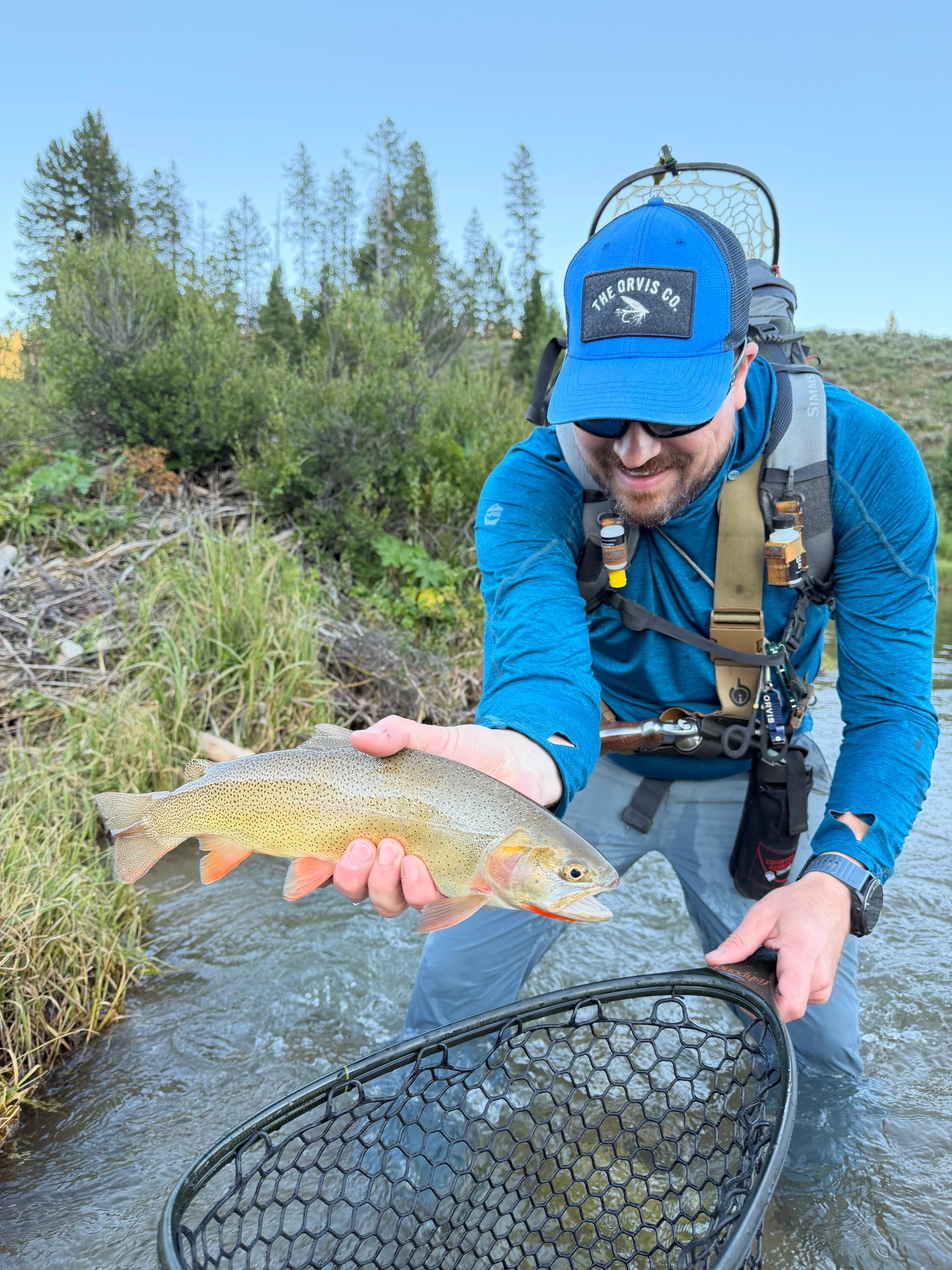
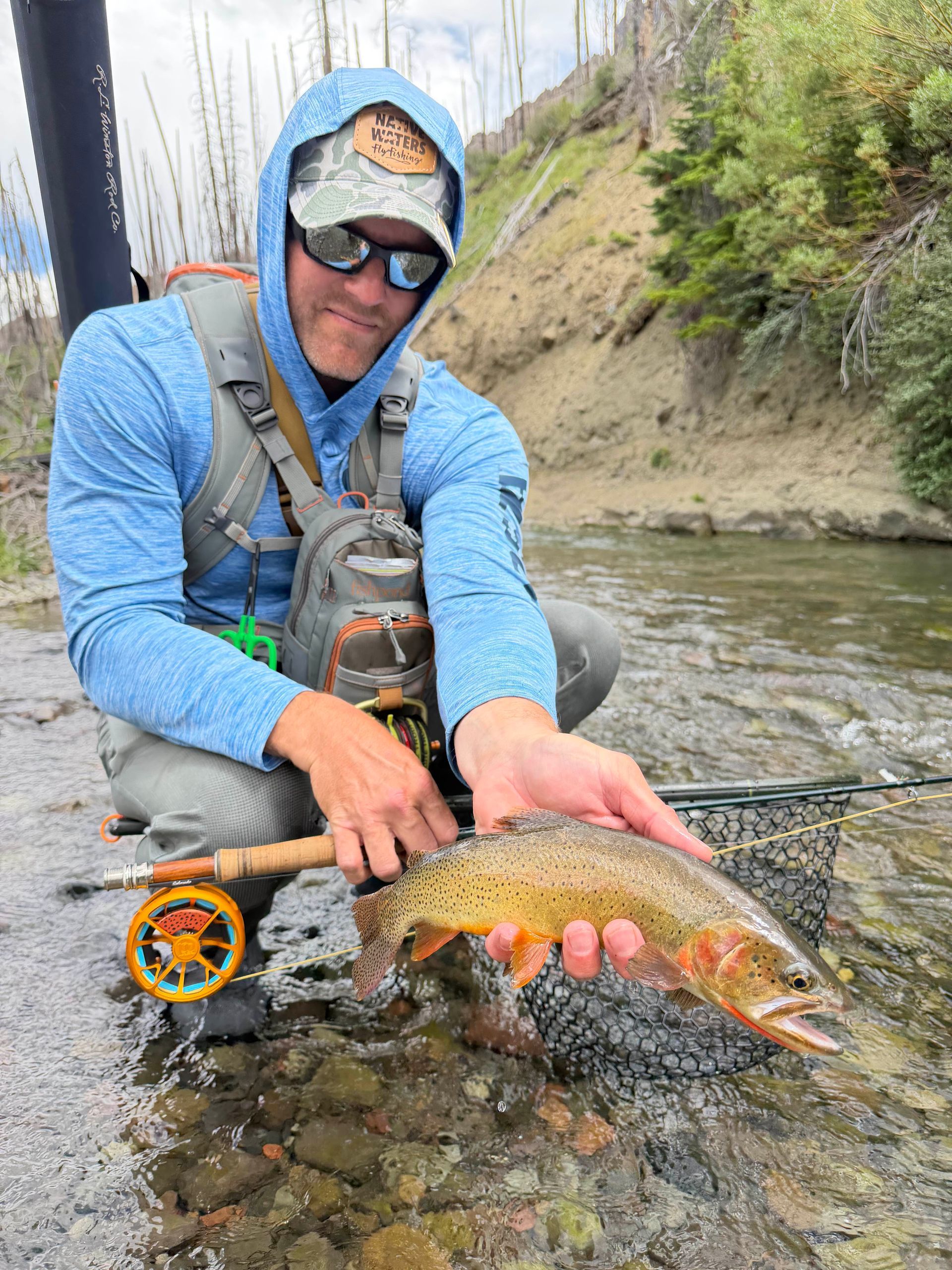
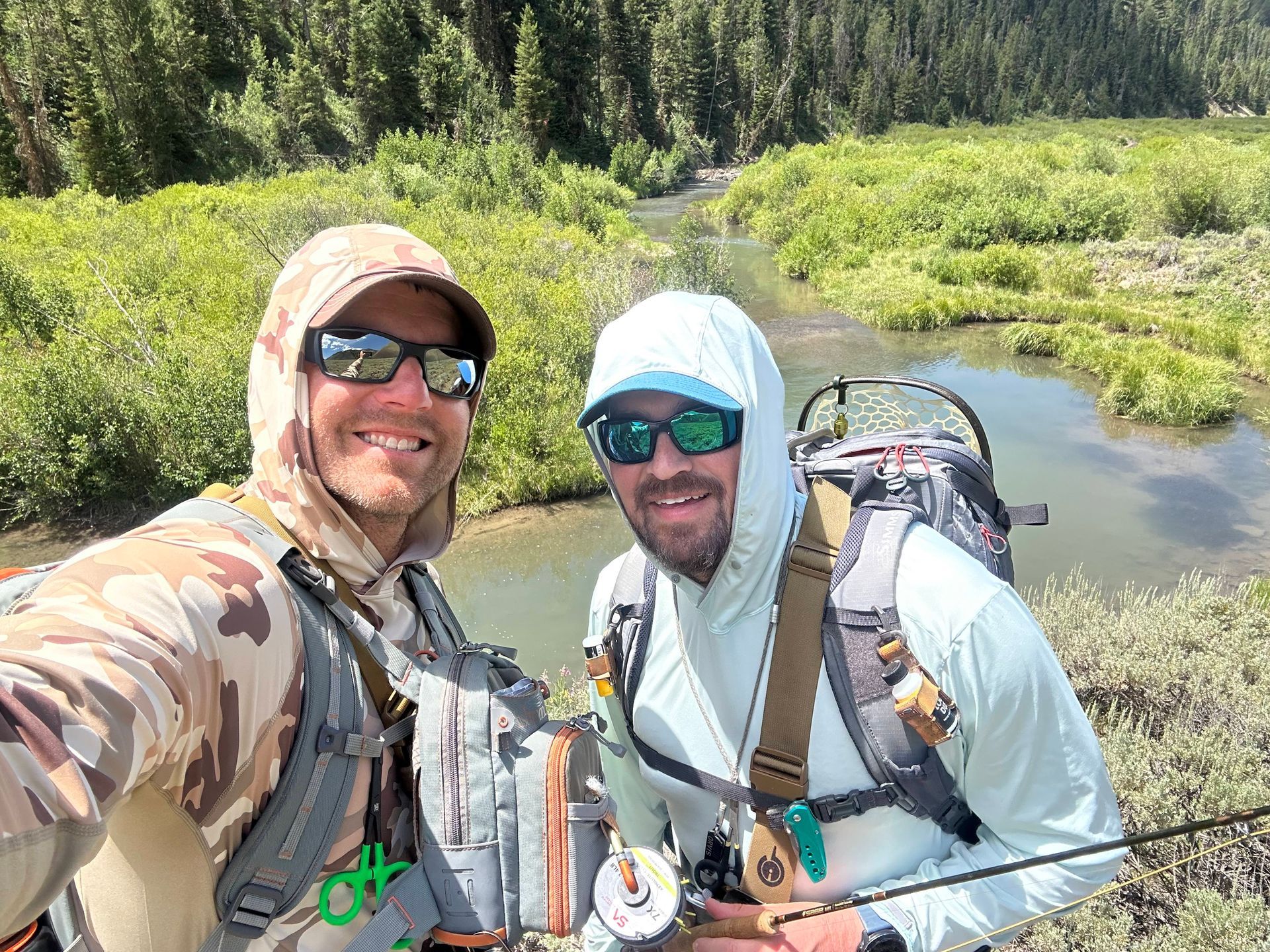
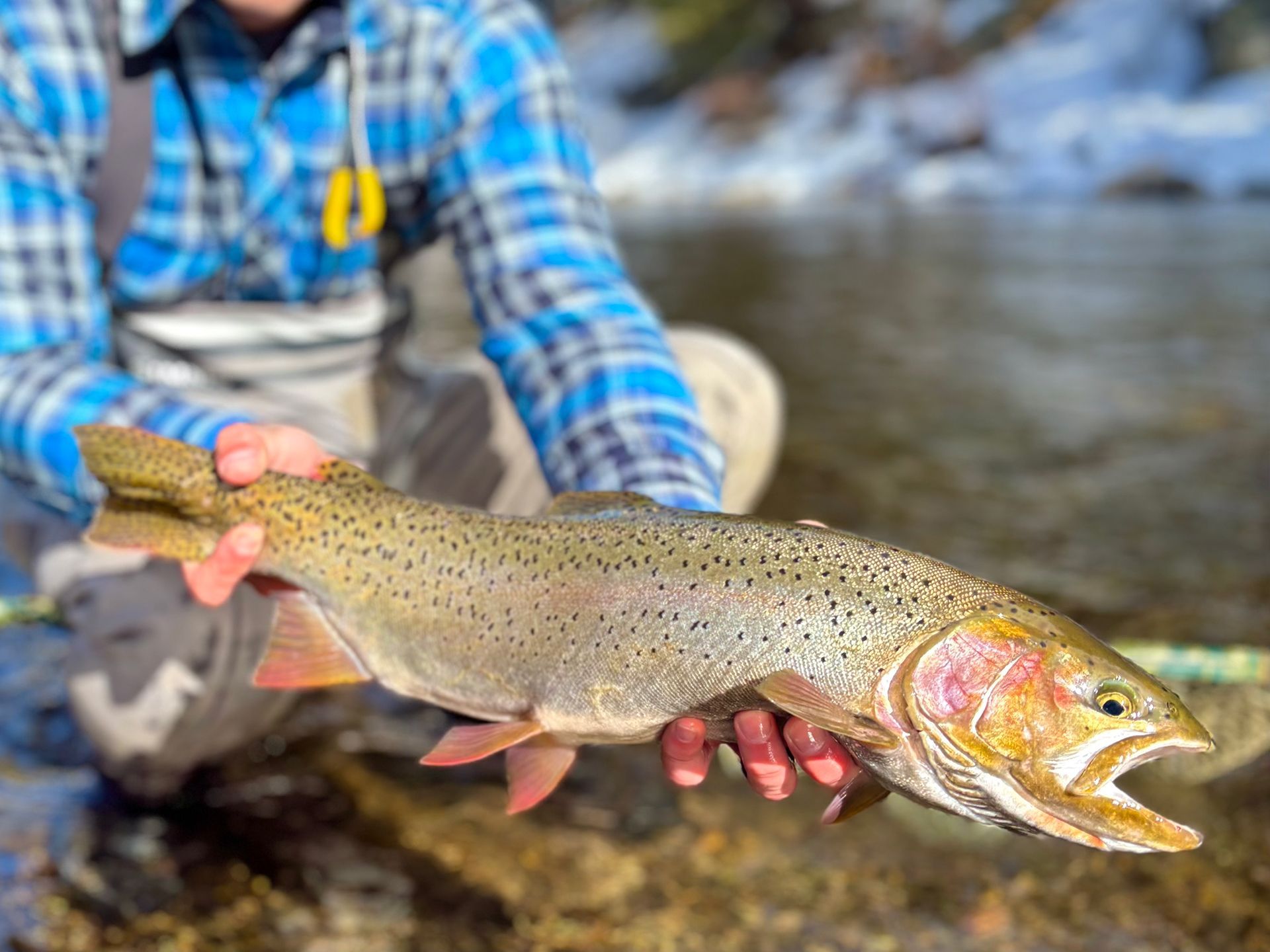
Completing the Wyoming Cutthroat Slam with a Good Friend

There are fishing trips you remember because of the fish you caught, and then there are adventures you remember because of the people who shared them with you. For me, completing the Wyoming Cutthroat Slam was both.


My angling buddy, Ethan, and I set out with a simple goal: catch all four of Wyoming's native cutthroat trout on the fly. We knew it would take us across some of the state's most beautiful country, but neither of us realized just how memorable the journey would become.


The Wyoming Cutthroat Slam isn't simply about checking fish off a list. It's about exploring wild places, learning the history of these incredible native trout, and appreciating the conservation efforts that have made this fishery one of the finest in the West.

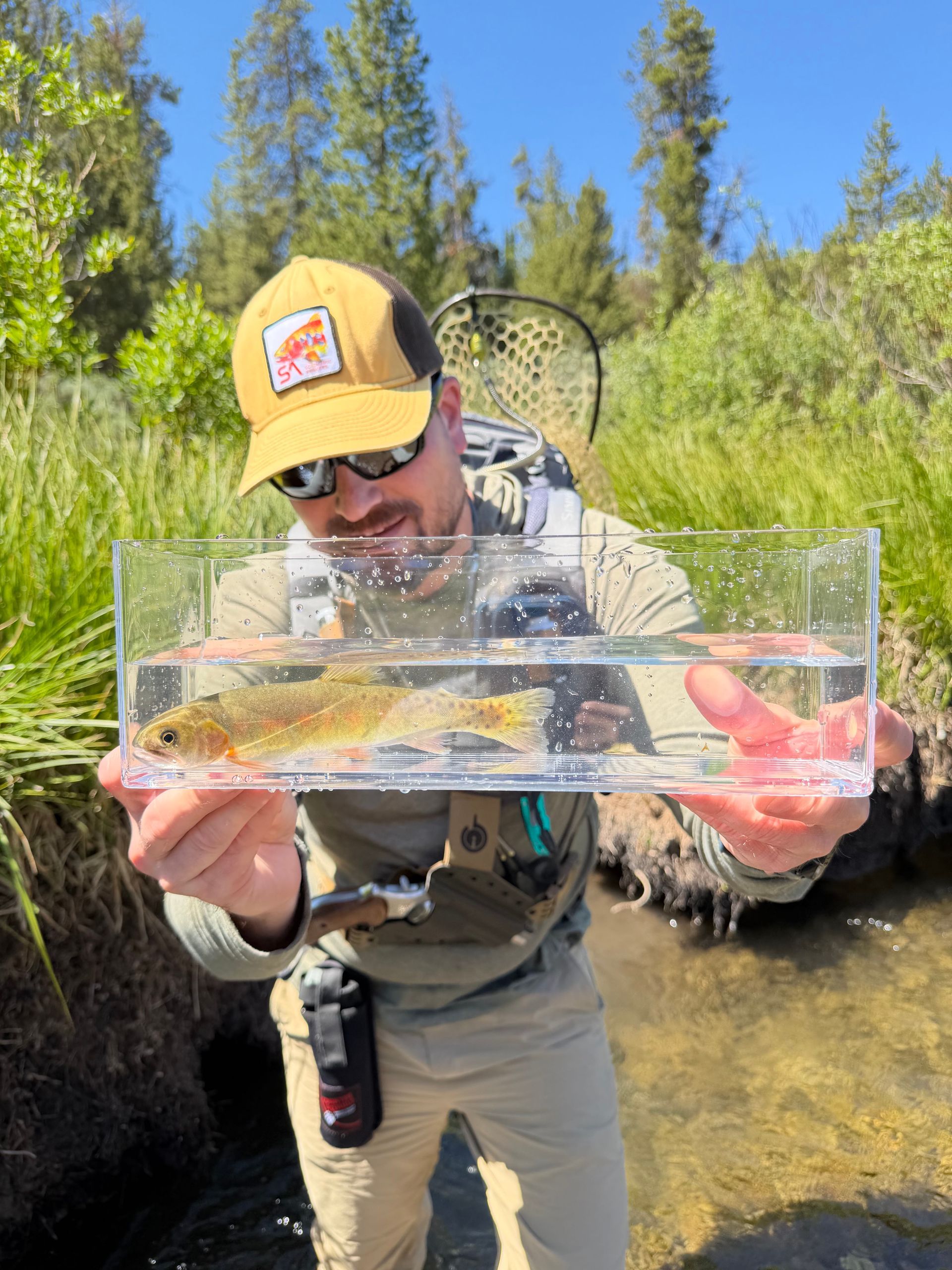
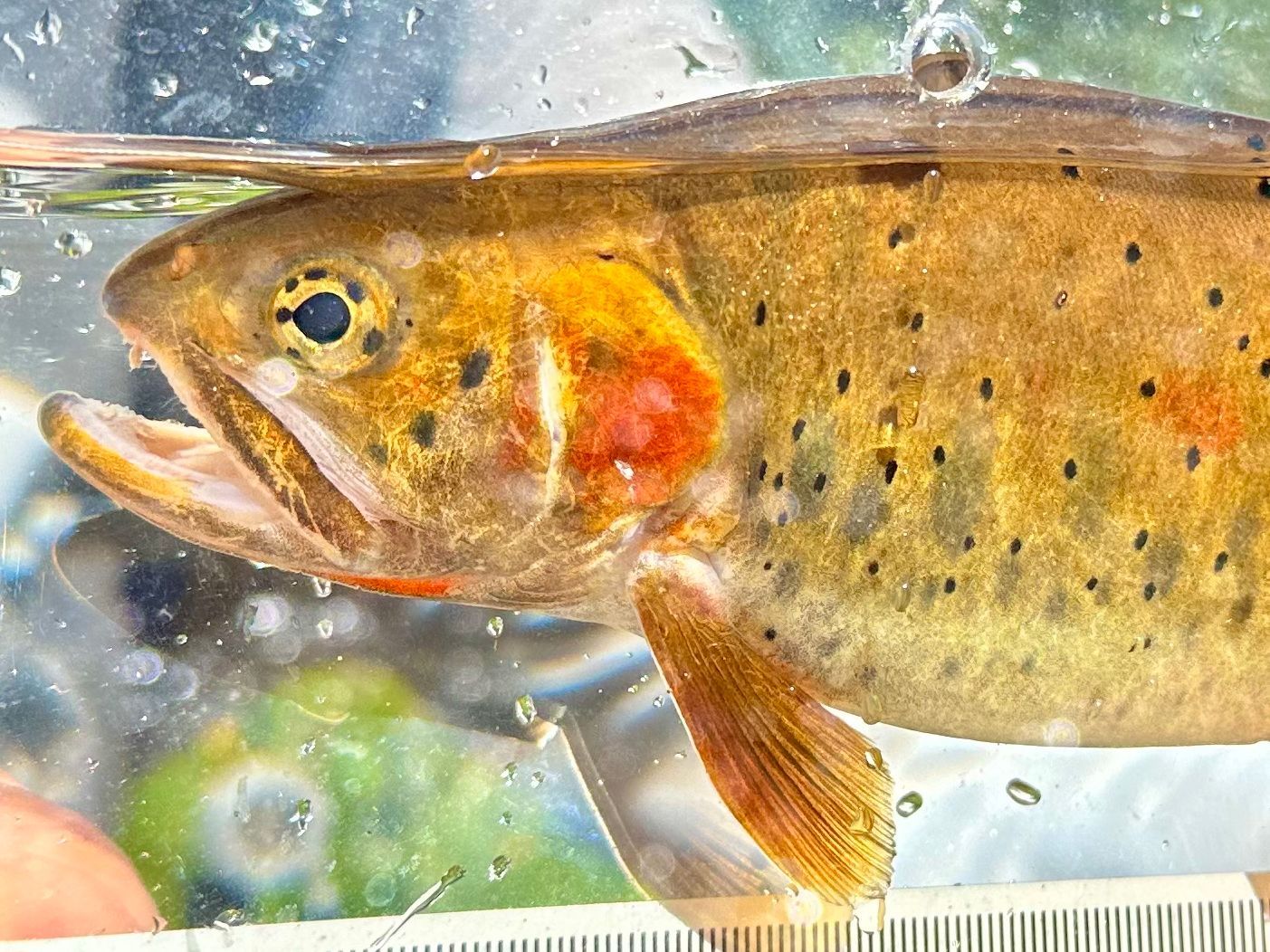
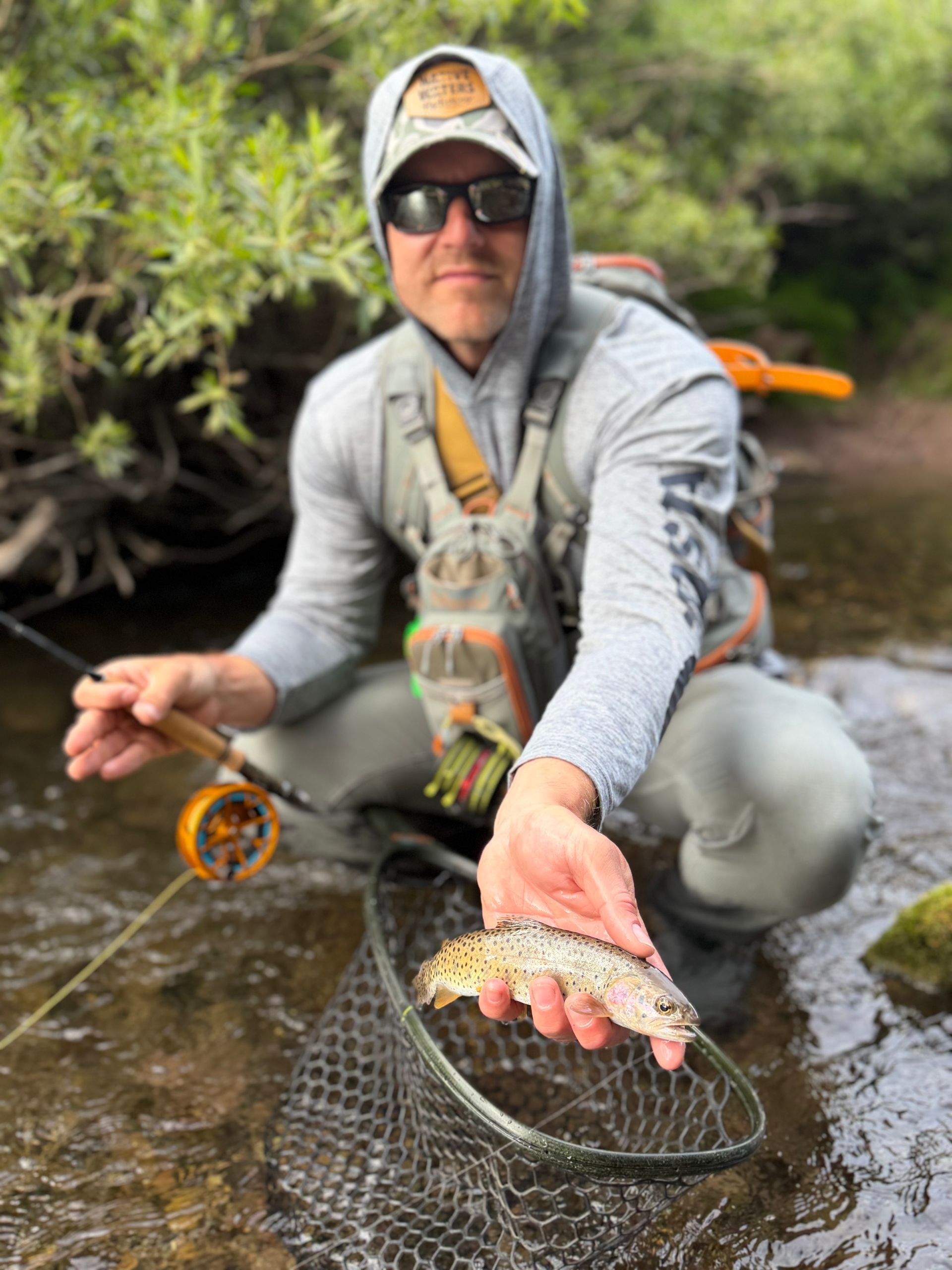
Ethan with Cutthroat trout in clear tank
Four Fish, Four Adventures

To complete the Slam, anglers must catch Wyoming's four native cutthroat trout subspecies:


  • Yellowstone Cutthroat Trout
  • Snake River Fine-Spotted Cutthroat Trout
  • Colorado River Cutthroat Trout
  • Bonneville Cutthroat Trout


Each fish led Ethan and me into a different corner of Wyoming. Every watershed had its own personality. Some streams were tucked into high mountain valleys where the only sounds were rushing water and singing birds. Others required long hikes, careful presentations, and plenty of patience.


Of course, not every day went according to plan. We battled hot weather, selective fish, and occasionally wondered if the next bend in the creek would finally hold the trout we were searching for. Those challenges only made the successful days even sweeter.


The Best Fishing Partner Makes the Best Memories

One of the greatest parts of the experience was sharing it with Ethan.


Every successful trip brought high-fives, laughter, and plenty of good-natured competition over who landed the better fish that day. We celebrated each other's successes just as much as our own because we both understood what it took to reach each milestone.

Some of our favorite memories had little to do with catching fish. They were the early morning drives before sunrise, swapping stories while rigging rods, eating lunch beside mountain streams, and laughing about the fish that somehow managed to throw the hook at exactly the wrong moment.


That's the beauty of fly fishing. The fish are important, but the friendships built along the way often become the lasting reward.
Wildlife Encounters We’ll Never Forget

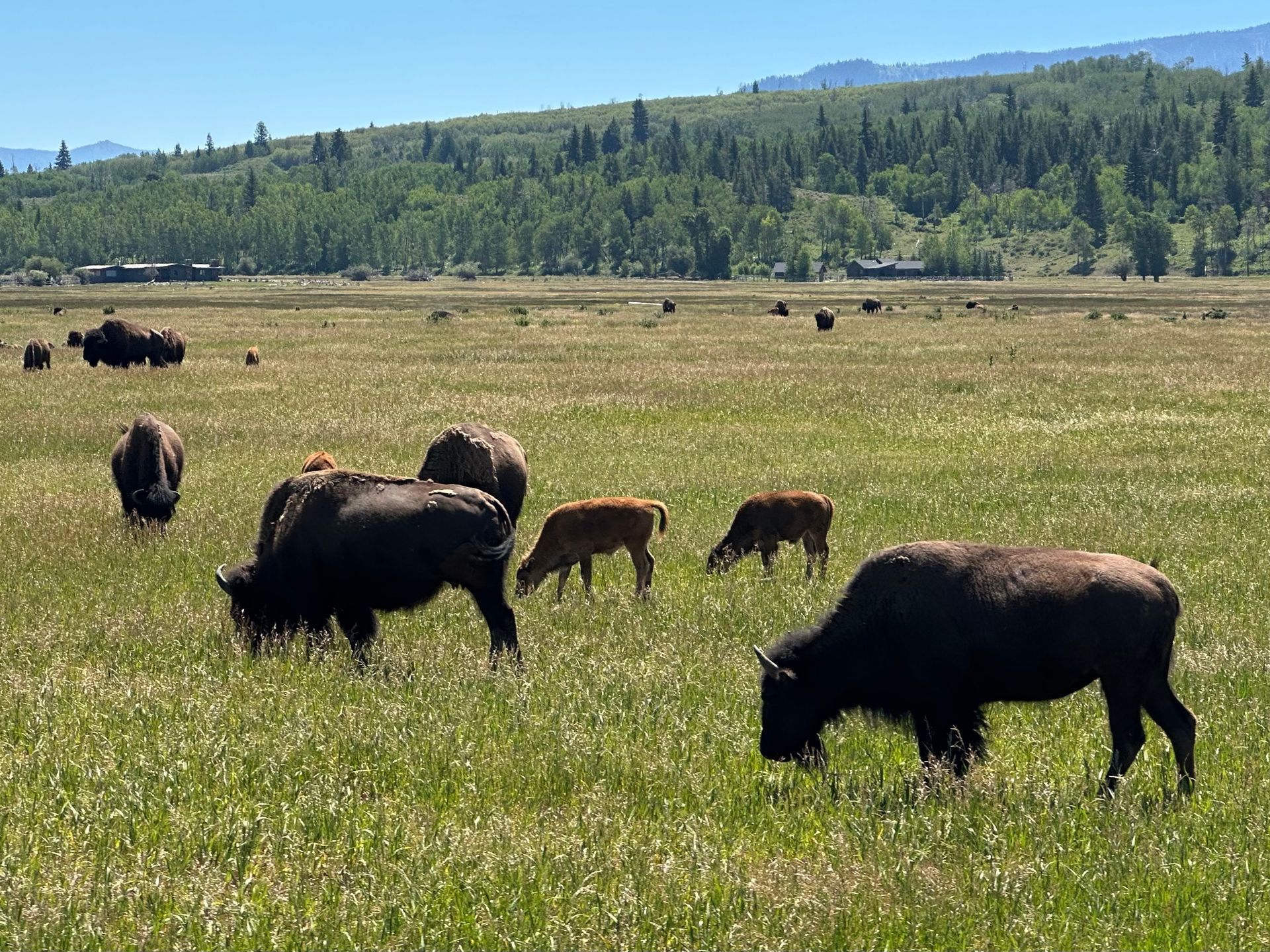
One of the things Ethan and I quickly realized during our quest to complete the Wyoming Cutthroat Slam was that the trout are only part of the adventure.


Wyoming's wild landscapes offered far more than incredible fishing. Along the way, we were fortunate enough to experience wildlife encounters that made the journey even more memorable.


One morning, while driving toward a remote stream, we spotted a grizzly bear sow with her two cubs moving slowly across a distant hillside. It was one of those moments that instantly reminds you that you're a visitor in truly wild country. We watched respectfully from a safe distance, taking in a sight that few people ever get to experience firsthand.


On another trip, a couple of moose appeared along the edge of a willow-lined creek, seemingly as interested in the water as we were. One morning we even witnessed a bachelor herd of elk making their way across the sagebrush flats. It’s quite a spectacular sight seeing 3 dozen or more massive bull elk all together from only 50 yards away. And then there were the birds. Bald eagles often patrolled the rivers overhead, while hawks, osprey, various songbirds, and countless other species added life and movement to every valley we explored.

These moments became just as important as the fish themselves.


Fly fishing has a way of slowing you down and making you notice the world around you. When you're standing in a cold mountain stream, surrounded by wildlife and untouched landscapes, you realize the experience is about far more than trout.


For Ethan and me, completing the Wyoming Cutthroat Slam wasn't simply a fishing accomplishment—it was an immersion into Wyoming's wild places. The native cutthroat were the reason we traveled there, but the grizzly bear and cubs, the moose, the bull elk, soaring eagles, and countless other encounters became part of the story we'll remember for the rest of our lives.


Those memories, just like the fish, are what keep us looking forward to the next adventure.


Why the Wyoming Cutthroat Slam Matters

Wyoming's native cutthroat trout represent an important part of the state's natural heritage. Decades of conservation work have helped restore and protect these remarkable fish, allowing anglers like us to pursue them in healthy, sustainable fisheries.


Completing the Slam gave Ethan and me an even greater appreciation for the work being done by fisheries biologists, conservation groups, and countless volunteers dedicated to preserving native trout habitat.


It also reminded us that every angler has a responsibility to care for these fisheries. Using barbless hooks, practicing careful catch-and-release, keeping fish wet during photos, and respecting spawning areas all help ensure future generations can experience these incredible waters.


The Flies That Worked

Like most fly anglers, we carried far more flies than we actually needed. Still, a handful of patterns consistently earned their place at the end of our tippet:


  • Parachute Adams
  • Elk Hair Caddis
  • Hippie Stomper
  • Chubby Chernobyl
  • Jig Lightning Bug
  • Pheasant Tail Nymph
  • PrinceNymph


Some days the trout eagerly crushed dry flies. Other days they made us work for every bite. That's fly fishing—and honestly, we wouldn't have wanted it any other way.


More Than a Slam

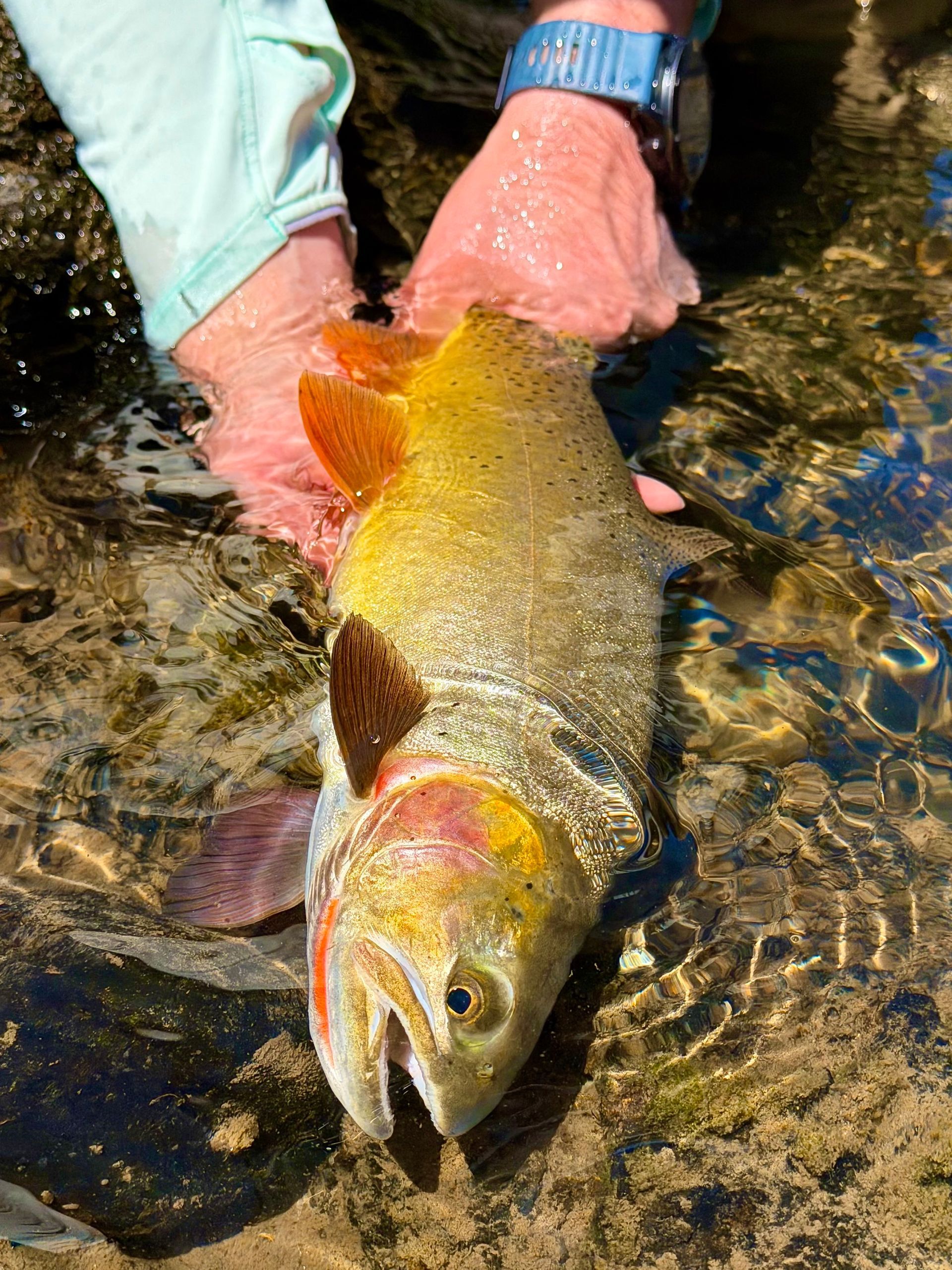
When Ethan and I finally completed the Wyoming Cutthroat Slam, there wasn't a huge celebration. We simply stood beside another beautiful Wyoming stream, hugged, admired one more incredible native trout, and realized we'd accomplished something we'd talked about for quite a while.


Looking back, the accomplishment wasn't just about catching four species. It was about the miles traveled, the spectacular scenery, the lessons learned, and the friendship that grew stronger with every trout.


The certificate is a nice reminder, but it's the memories that mean the most.

Final Cast

If you've ever considered taking on the Wyoming Cutthroat Slam, don't wait.


Find a good fishing partner. Pack your fly rod. Explore streams you've never fished before. Take the extra hike. Watch the sunrise. Appreciate every fish, no matter its size.


If you're lucky, you'll finish the journey with more than four beautiful trout to your name.


You'll come home with stories you'll tell for years—and friendships, like the one Ethan and I strengthened along the way, that make every cast worthwhile.


Tight lines, and maybe we'll see you somewhere along a Wyoming stream.

By Greg McCrimmon • March 22, 2026
March in Colorado is a month of transition. Winter still holds the high country in its grip, but hints of spring begin to appear along the rivers; this year more than ever with the mild winter. Snowmelt hasn’t yet begun in full force, flows remain manageable, and trout start to shake off their winter lethargy. For fly anglers willing to brave crisp mornings and unpredictable weather, March can offer some of the most rewarding fishing of the year.
August 1, 2023
This seems to be a common question I am often asked when the term, "native trout," is mentioned. It's a legitimate question, and one that I asked myself not so long ago. While I had certainly heard the term before, perhaps from a couple of old timers at the local fly shop or briefly mentioned in a fly fishing publication, I guess I never paid much attention to it. Up until a few years ago, it was simply that; just a term. A term I honestly am not sure I could have accurately described at that time, and most definitely one that had little to no effect on me as far as fly fishing was concerned. Before going into the specifics of defining what a native trout is, let me first begin with my story on how I was introduced to them. It wasn't until I caught my very first Greenback cutthroat trout in the Rocky Mountains of Colorado that I started becoming more interested in what exactly a native trout was. I remember holding that first Greenback on that blue bird summer day, and as I marveled at its beautiful colors and distinctive markings, I could not help but feel this incredible sense of gratitude from within myself. It wasn't the largest trout I had ever caught, and certainly not the most entertaining fight I have encountered when hooked up with a fish, but there was something spectacular and unique about being in that place, at that time, holding that trout; A fish that belonged in this rugged and beautiful landscape. As I released it back into the wild and watched its crimson belly disappear under the surface ripple of the creek, I knew at that moment something had been birthed in my heart. I had experienced and connected with a piece of these Rocky Mountains; a piece every bit as notable as the bighorn sheep, the mountain lion, or the mighty elk that we are all so familiar with here in Colorado. I had caught my first native trout of Colorado and from that inaugural encounter, a passion had been born in my heart, and I knew I wanted to find out more about them. And so I began this journey by reading everything I could find about native salmonids. I bought books, watched videos, read magazine articles, and researched websites. What I soon discovered was entirely simple really. By definition, a native fish is one that originated from that particular area; it's "homeland" in essence…where it is native to. There are several species of the salmonidae family of fish, which include salmon, trout, char, grayling, and whitefish. Under most of those species, there are typically several more subspecies and strains that are divided up based on geographic area and the waters in which they reside. Here in the Rocky Mountain states and across much of the western states, the cutthroat are the native species of trout that call this area home. Among the cutthroat species, there are 12 separate subspecies still in existence today that are spread out in different areas throughout the west. While this example can be broken down further and further among all species of trout, by definition, to keep things simple, "native" simply means where the species originated from. Some might argue that the definition I just offered doesn't quite define the term in its entirety, or that it is a bit generic. Some might say that a rainbow trout for example, born in a river in Colorado or Michigan (somewhere it's not originally from as a species), and wasn't a hatchery stocked fish, is a native of that particular river. I would agree that this particular trout born in the river in a natural environment is most certainly a "wild" trout, but I would not define it as a native one. A native trout is one that was put there by the Creator and not by the hands of the creative (man). In my estimation, a Greenback cutthroat trout is more native to Colorado than anyone driving around in their beat-up 1992 4Runner with 300,000 miles and that all too familiar "NATIVE" sticker proudly displayed on the bumper. I'm confident that all of you Coloradans know what I'm talking about and for those of you who are "natives" of Colorado, I hope you don't take offense by what this Michigander just wrote. Ha ha. Okay, big deal. What's all the fuss about whether a trout is native or not? I can only imagine some of you are asking something similar at this point. Am I right? If that's you, don't stop reading quite yet. My hope is that there is something here for every fly fisherman to chew on and connect with. That being said, let me be clear about a couple things. Am I suggesting that there is something less special or significant about catching a non-native trout? Absolutely not. While I usually consider myself a "purist" on certain, and more often than not, very specific levels that pertain to fly fishing, I am not one to pass up a day on the South Platte River in Colorado even though it's almost certain I won't catch a native cutthroat. I very much enjoy hooking into large rainbows and browns that have lived wild in Colorado lakes and rivers for generations, and I don't ever foresee a time in the future when I won’t enjoy that. So what am I saying then? More than anything I suppose, I just want to somehow convey to anyone who has read this far, that native trout have their place among us fishermen also. They may not have yet captured the hearts of the majority of fly fishers out there, but if you're anything like me, the first time you hook into a trout in its native range, you will forever be a different person. As I sat down this morning to write this short article, I realize how much more I have left unsaid. I guess I wasn't exactly sure where I would venture on this topic today. If I have answered some questions for you, then I am thankful for that. If I have only caused you to have more questions, that's ok too. Be patient, I am more than willing to answer your questions to the best of my abilities. More than anything, I hope I have piqued your interest enough, to whatever degree that may be, to discover for yourself what a native trout means to you personally. For me, a native trout is so much more than simply its black and white description. It is an experience and a connection with the created world that as you can probably tell, is often times difficult to describe with words. It is more than a physical experience. It's an emotional, and I would daresay, spiritual experience as well. I know I’m not the only one who feels that way. While my attempt at describing a native trout hardly does justice on the large scope of the subject, my hope is that when you experience catching a native trout for yourself, you will have a better understanding and a clearer picture of what I am talking about.
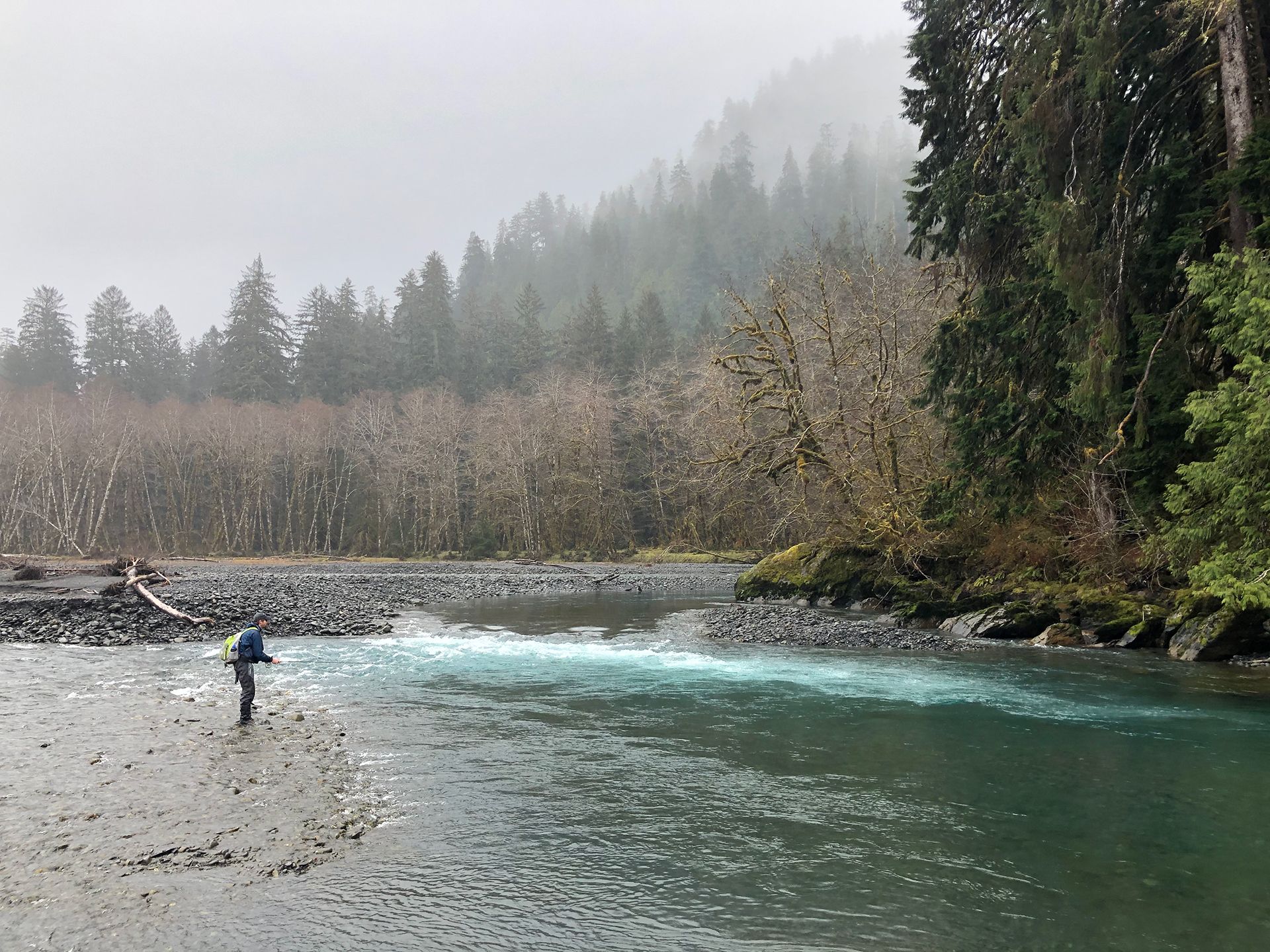
An angler stands on the shore of a misty riverbank.
March 10, 2020
Redemption. It probably isn’t the most common word used to describe a fishing trip, but redemption was certainly one of the prominent emotions I felt at the highlight of a recent trip to the Olympic Peninsula of Washington. It was March 1, 2020. I was sitting on an airplane at Denver International Airport waiting for departure. Seattle was the destination, and my thoughts took me back to three years earlier when I was sitting on a different plane heading to the same destination in high hopes of catching my first Steelhead on a fly rod. That trip didn’t go as planned, as fishing trips oftentimes don’t, but I vowed then to return and set the record straight; and that is what I fully intended to do in 2020. It’s amazing how the anticipation of a fly fishing adventure can so easily erase the memory of the recent past. I mean, who wants to dwell on 10 straight days of steady rain causing every river in the Pacific Northwest to completely blow out, making them virtually unfishable? Pair that with the unfortunate reality that my good friend, and local Steelhead expert, Gary, came down with the flu on the day I had arrived. Sickness aside, the flooded rivers alone became the main factor in that trip being less than ideal. I obviously don’t blame the angling misfortune on my friend for becoming sick. No one plans for that. I felt terrible he was feeling ill, and he felt equally awful, as I would have in his shoes as well, for “ruining” the trip. The reality however, was that fishing for steelhead was basically out of the picture based solely on the river conditions alone, so I made the most of my time and sought out some sea-run cutthroat in the local bays around Tacoma. As I sat on that plane, memories still fresh in my mind from 3 years prior, I knew ‘redemption’ was just as much a lingering thought for Gary as it was for me. ***** The drive from SeaTac to the small town of Forks, WA. was simply put: breathtaking. The Olympic Peninsula is one of those places that grabs your attention in a vise and won’t let go. I wouldn’t have it any other way, and as the wild feeling of this vast wilderness settled on my soul, it felt comforting, and offered a sense of belonging. I’ve always felt that way in the wilderness. Glacial blue water, paired with towering old growth forests; a Pacific fog lingering over the valleys, and Roosevelt elk feeding in the open meadows along wild rivers, painted a picture nearly too grand for words. I was happy to be there, and couldn’t wait to get a line wet in the morning. Steelhead fishing is a lot like many jobs I’ve had over the years; especially the more service-oriented professions. When speaking with someone on the phone who was inquiring about a specific product or service, the common phrase I often heard from my manager was to always, “under-promise and over-deliver,” Gary must have heard a similar phrase at one time, because he had certainly mastered this art on our 2 hour hike through the forest to the section of river we had planned to fish on that first day. I’ll never forget his words: “If you hook-up with a fish, consider it a good day. If you land a fish, consider it a great day.” He went on to tell me how he had known plenty of people who fished an entire winter without landing one fish. He always ended these stories with the all too familiar phrase, “That’s steelheading,” as he made a shrugging motion with his shoulders all while sporting a grin on his face. My inner thoughts as he shared these stories ranged from, ‘Give me a break, who spends a whole season fishing without catching a single fish?’ to, ‘We better get on some water ASAP!’ All things considered though, I was well aware of the ‘fish of a thousand casts’ description when speaking of these silver ghosts. I absorbed the information in stride and kept my pace steady as we meandered through the most ancient and pristine forest I had ever stepped foot in. Day one turned out to be a “good day.” I had a strike, followed by a split-second battle, and then nothing. It was enough to release a primal scream from my lungs however, and share a high-five with Gary. I figured I had made at least a few hundred casts that day; well on my way to landing one of these river giants, or so I hoped. During the hike out, I felt much more present with my surroundings. I had fooled a steelhead on our very first day. My confidence soared as I thought about the remainder of the trip and all the water we had yet to explore. It was a good day. The next morning we left the hotel early, grabbed some coffee at a local drive through, and headed to one of the many local rainforest rivers. This particular river is one of the more well known rivers on the OP, and for good reason. Some of the largest trees in the world line the banks of this river in the National Park section, creating one of the most unique and incredible landscapes in the country in my opinion. Apparently the Steelhead fishing is pretty good too. It would be a dream come true to catch a wild steelhead in this gorgeous environment. I was already playing the scene out in my mind as we hiked upriver. A couple hours later we stepped out into the river. We both looked at each other and knew we were thinking the same thing. This was ‘Steelhead water.’ Our energy and excitement was high as we looked this stretch over in great detail and discussed how we would fish it. Gary started high on the run and I started 50 yards below him; both of us slowly worked our way downriver covering every inch of water we could with our nymph rigs. As I approached a large, partially submerged log on the far bank, I intuitively knew that my opportunity might very well be upon me. The deeper pool formed right in front of the log where the eddyline appeared was as ‘fishy’ of water as I had seen yet. I had to make the next cast count. I knew I had to let my nymphs drift for as long as possible along that seam and right up to the log before lifting my rod and ending the drag-free drift. The danger was that if I let it drift too long, I would inevitably end up snagging the log and potentially spooking anything holding in that run. Needless to say, I did not want to do that. I tried a few shorter casts at first just to make sure nothing was holding in the less attractive water, but it also provided some critical practice attempts before drifting my rig through the prime water. I took a couple more steps downriver to position myself in the most ideal spot to make the cast. The weighted flies hit the water with a soft ‘kerplunk’ milliseconds before my indicator began its course downstream in the current, nymph rig in tow. I made my mend just as the indicator passed by me and held my breath as my flies approached what could aptly be named, “Steelhead Lane.” I waited until the last possible second and began lifting my rod to avoid entanglement with the large strainer that loomed beneath the surface of the water. Too late. Almost immediately there was tension on my line and my rod bent nearly in half to let me know I had snagged on the log. I gave it a quick jerk upwards and downriver just in case, but the line did not even budge. I was convinced I had snagged on the log, until I watched my line zip upriver so powerfully and fast creating the sweetest music from my reel that anglers cherish the world over. “Fish on!!!” My mind raced and adrenaline surged through my veins as I entered into a battle that commanded every ounce of attention my entire being could muster. Gary reeled his line in and came over as fast as he could to help, offering encouragement and advice, and of course snapping a few photos along the way. This was after all, the very first Steelhead I had ever hooked up with for more than a few seconds. At that very moment, we had entered “good day” status. I was going to do my best to turn it into a “great day” by landing this submarine of a fish! We weren’t making that possibility any easier on ourselves by not having a net with us however, but Gary reassured me that we would bring it to hand and tail it. I couldn’t let myself worry too much about that scenario, as this fish demanded my attention and expected a worthy opponent in me. I slowly backed myself up to the edge of the river as my line stayed taught and my rod remained bent into a tight curve. I was what anglers call, “corked.” On three separate occasions I was able to reel the fish into shallow water and catch glimpses of its large torpedo shaped body, only to have it tear away again into deeper, faster water; with ease no less. Each time it ran, my adrenaline spiked and the smile across my face broadened. This fish wasn’t going to give up without a fight that I would remember for the rest of my life. About fifteen minutes since the initial moment when I thought I had snagged into that log, my rod straightened out and the tension in my line came to a halt, right after I watched Gary skillfully tail a large fish. I screamed and pumped my fist in the air as adrenaline once again raced through my body. It was much like the feeling you get after shooting your first deer or elk; and every one after, for that matter. It was an exceptional Steelhead; a double banded buck. I felt such awe and an overwhelming sense of gratitude and respect for this native fish as I held it in my hands. I had never witnessed such an intense string of feelings as I did when I was hooked up with this warrior only moments earlier; and now as it recovered right next to me, cradled in my hands, I was engulfed with another round of emotions including; thankfulness, joy, excitement, relief, awe, wonder, passion, and of course, redemption. Those emotions stayed with me long after we watched that beautiful steelhead swim away and disappear into the cold blue depths of the river. I sat on the bank, rod by my side, for probably thirty minutes just collecting myself and replaying that battle over and over in my mind. I took my phone off airplane mode and to my astonishment, I had a connection! I sent a quick text out to my wife back home in Colorado to share my excitement. It was a great day. About an hour later, Gary caught and landed his first steelhead of the trip as well! It had now become a doubly great day, and one which would not be forgotten for a very long time. Redemption had never tasted so sweet as it had on that rainy day in Washington. I was reminded of an important life lesson on that trip. Most simply put: enjoy the journey. My trip to the Olympic Peninsula had been a success; but it would have been no less a success had I come back home without landing that steelhead. Just being on a wild river with a good friend in God’s country, is as much a part of fly fishing to me as the actual catch. Henry David Thoreau once said, “Many men go fishing all their lives without knowing that it is not fish they are after.” I think perhaps, Henry was on to something.
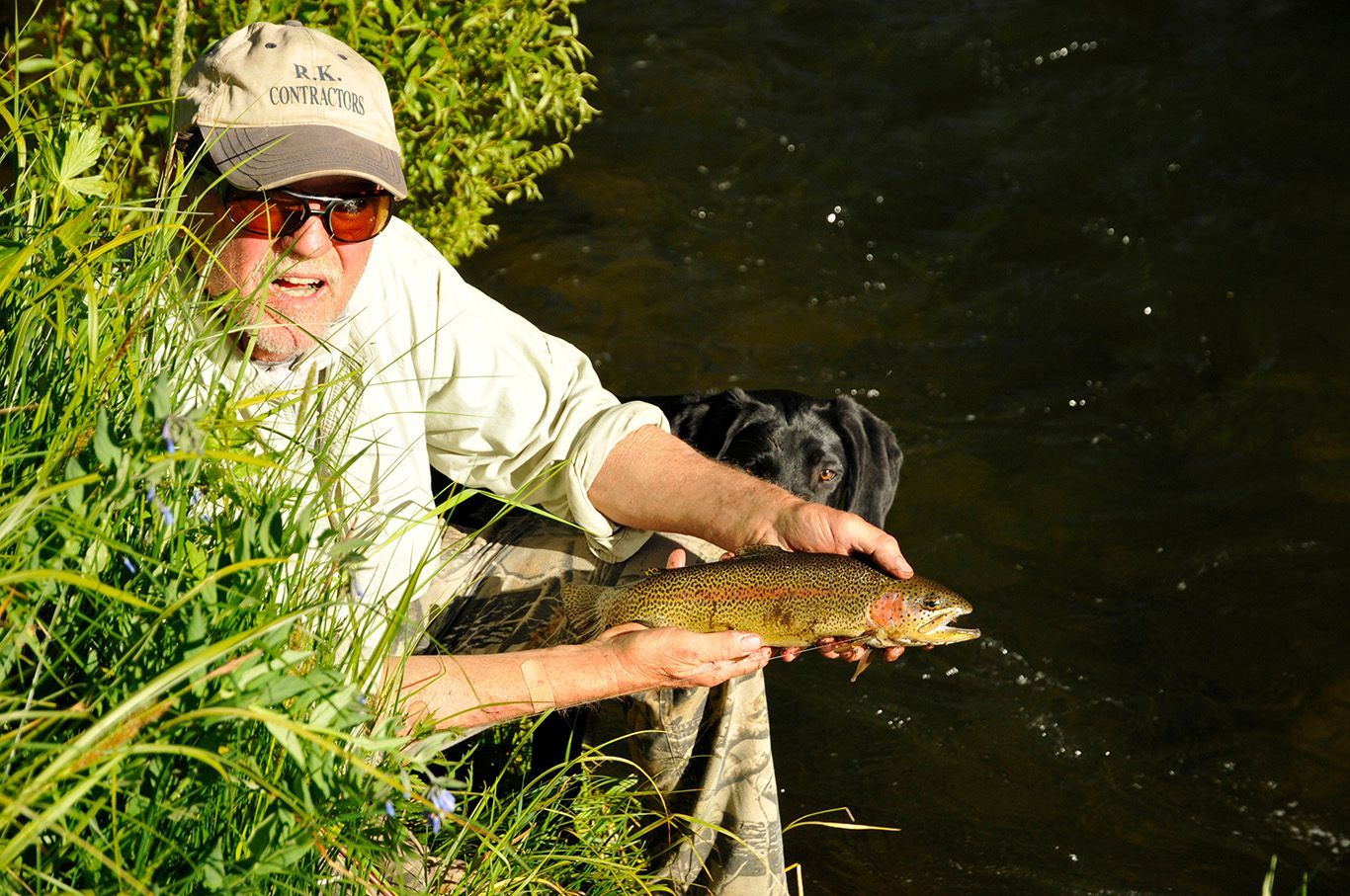
Sterling holds a trout on the bank of a Colorado river.
June 30, 2014
I met Sterling in the Flat Tops Wilderness of Colorado on my annual trip there to fish for Colorado river cutthroats; the native fish of that region. To be completely transparent, my black lab, Hoyt, was the one who first met him and introduced us. That dog has a funny way of doing that. From inside the camper I heard a bark and figured something or someone was passing by, and when I went out to check, there stood Hoyt and Sterling getting to know one another. I went over and shook his hand and introduced myself and before long we were talking about fishing. I picked his brain for a while to see if he was willing to reveal any “secret” spots for big cutthroats, and wouldn’t you know it, he was quite willing to share. That’s not always a common thing amongst fishermen; fly fishermen in particular it seems, or maybe that’s just because I am more often in the company of those who cast a fly rod. The three of us stood there in the middle of the gravel road for 15 or 20 minutes longer and then parted ways. I quickly jotted down the names of the lakes and streams he told me about for future reference before I forgot. I wondered if I would run into him again someday. He said he was camping up in that area all summer. I left for home without seeing him again, but the following week I made a plan to head back up; not only to fish those spots he told me of, but also to get to know this man more; or at least that was my hope. We crossed paths on the first afternoon and made a plan to go fishing for the evening. He said he knew of some great holes on the White river that would be full of rainbows and brookies. That sounded more than appealing to me. Most importantly to me, and probably unbeknownst to him, was that I was looking for the opportunity to ask him that age-old question, why? Why did Sterling spend much of his time chasing trout on the fly? After hearing a bit of his life story and casual conversation, I eventually got around to asking him just that. I told him I was working on a blog series during my journeys throughout the year and asked him if it was ok that I get his thoughts on the subject. He casually obliged but with the impression that he was deep in thought about the question. That was perfectly acceptable for me. After all, it's something I certainly have spent a great deal of time pondering. In the meantime, we had arrived at the river after a short hike and it was stunning! There was a great caddis hatch happening and hungry trout were rising. I tied on quickly and before I knew it, had caught 6 trout; a mixture of rainbows and brookies and all beautifully colored. Sterling caught a few of his own, one rainbow being 15-16 inches, and simply gorgeous. All that and a picture perfect sunset to cap off the evening. On our hike out I decided not to pressure the question. I figured if Sterling wanted to share his thoughts he would in his own time. It wasn’t until later that night sitting around a campfire that he finally touched on the subject of why he had become a fly fisherman. While completely mesmerized by the crackling flames of the campfire (the effect campfires have on just about everyone I have ever met), I heard my new friend say, “So, why do I fly fish? Simple; because I have met the greatest people while fly fishing.” He was looking directly at me when he said that, and I felt quite honored to hear that from essentially a stranger to me. On the other hand, I feel as though I have never met a stranger on the river. I agreed with his comment completely, and when I look back on my journey of fly fishing, I can confidently say the same thing. As we sat and talked more, the campfire worked its magic and Sterling opened up even more. He grew up in North Carolina and started fly fishing when he was 16 years old, 51 years ago. He said he started because his dad disliked fishing and wasn't willing to take him. As a teenage boy, he figured he was going to do it in spite of his father; as most teenagers do at one point or another. He caught his share of brook trout in the smoky mountains near where he grew up, and eventually made his way west after going to college and serving in the US Air Force. He made his living as a land man for an oil company and retired a couple of years back; more of a forced retirement it sounded like. He had quite a scare one day while fishing, believe it or not, and collapsed in the backcountry in the remote Flat Tops Wilderness of Colorado; the same wilderness area we were in at the moment. He managed to hike himself out and get to the hospital several miles away and underwent surgery to repair 3 arteries around his heart. The doctors told him he was fortunate to have survived his ordeal and probably should consider not fly fishing in the backcountry anymore. Well, that was not going to fly for a guy like Sterling. He made a full recovery and was happy to be back here in this beautiful part of the country. He spends his whole summer up here fly fishing every piece of water he’s willing to hike to. One thing is for certain; the man can fish and he has plenty of stories of monster trout he has caught in remote lakes and streams up this way. There’s no doubt that after his 8 years of coming here, he has a handle on the topography of this wilderness. After hearing a good chunk of Sterling’s life story, he looked at me again and said, “I fly fish because I want to live….friggin L-I-V-E.” Once again, I found myself nodding my head in complete agreement with a big smile on my face. After everything this man had been through in the last 2 years, he certainly had a very real and healthy perspective about life. I can’t even begin to imagine how many trout he has had on the end of his line in 51 years of fishing on the fly.